Bardella and Chateaubriand: “In France, the president is often perceived as an intellectual above all else.”

In a France where the figure of the president is often linked to an image of an intellectual, Jordan Bardella’s passion for Chateaubriand raises many questions.
The intellectual perception of the president in France
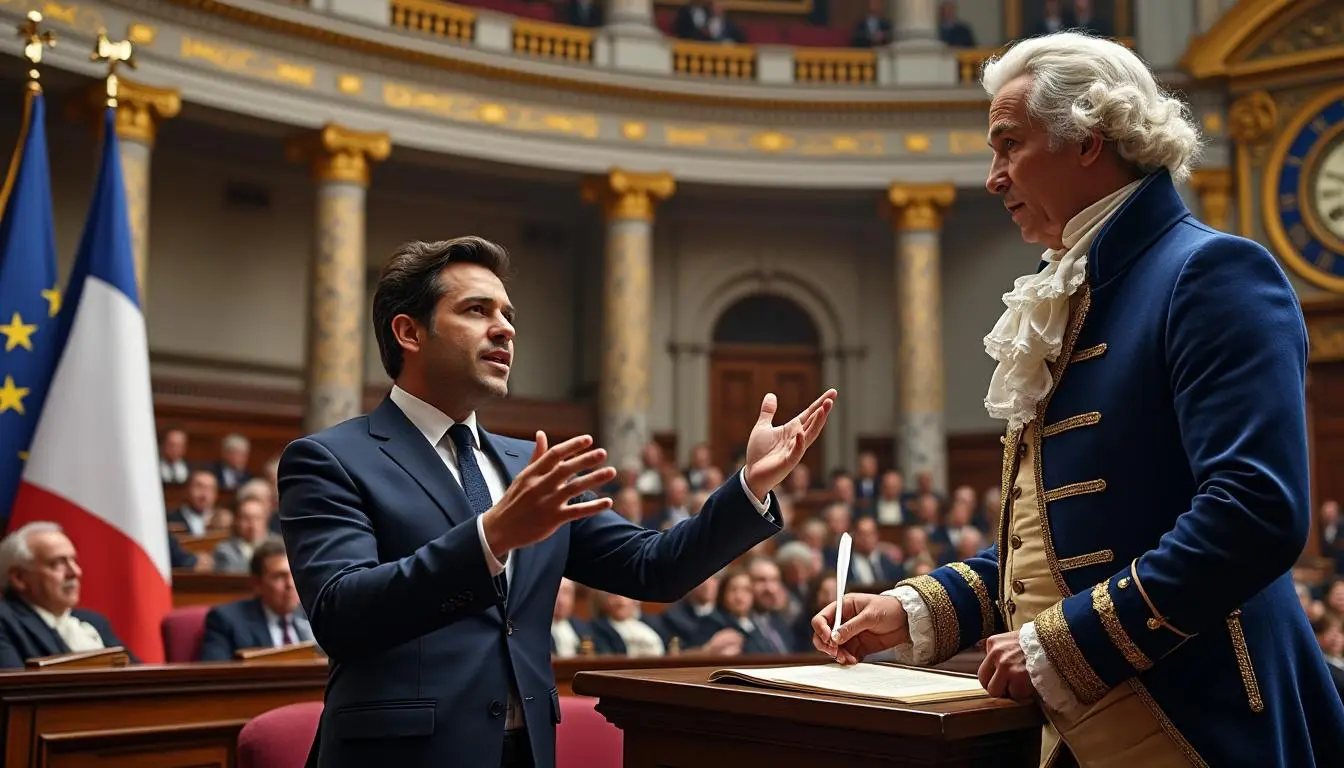
French politics is deeply marked by the idea that the president must be an intellectual. This phenomenon has historical roots, with emblematic figures such as François Mitterrand and Charles de Gaulle both cultivating an image of intellectualism. From this perspective, the perception of leadership is not limited to political skills or administrative decisions. In France, a president is also someone who crafts sophisticated speeches, understands culture, and engages in dialogue with elites. This image is reinforced by public expectations, which often see the president as an enlightened and cultured leader.
Jordan Bardella, president of the National Rally, seems to have grasped this dynamic. By regularly displaying his admiration for Chateaubriand, he strategically positions himself within this tradition. As Philippe Moreau-Chevrolet, an expert in political communication, points out, this cognitive interest aims to promote an image that transcends superficiality, attracting an audience eager to connect with intellectual and literary values. It is interesting to observe how this desire for “presidentialization” manifests itself in Bardella’s public discourse. The choice of Chateaubriand is not insignificant.
Chateaubriand’s “Memoirs from Beyond the Grave” are often cited as a masterpiece of French literature. By referencing such a prestigious author, Bardella seeks to appeal to those who expect intellectual depth and cultural sensitivity from their president. The reference to Chateaubriand resonates with a quest for political and cultural identity in a country grappling with numerous identity and social debates. Indeed, literary and cultural identity is intrinsically linked to the perception of French politics, thus forming an indissoluble link between political discourse and culture.
Chateaubriand’s choice, a deliberate strategy
Bardella’s strategy of embracing Chateaubriand is not based solely on his admiration for the writer, but also on a desire to ground his discourse in a strong cultural heritage. Chateaubriand was not only a writer, but also a politician, an antagonist of Enlightenment rationalism, and a fervent defender of Romanticism in literature. Through this figure, Bardella can evoke a return to more traditional values and an implicit critique of contemporary presidents, often perceived as disconnected from the heartland of France.
Through Chateaubriand, he also introduces a debate on what it truly means to be a leader in France. Does it involve being a man of action, a tactician, or is it primarily an intellectual capable of weighing their words? This question resonates with the public’s expectations regarding the intellectual and cultural capabilities of its leaders. The challenge is all the greater because these expectations can vary from one segment of the population to another, creating a mosaic of perceptions.
Sur le meme sujet
The repercussions of this perception on political leadership
The correlation between the president’s intellectual standing and popular support is a fascinating aspect of the French political landscape. A president perceived as an intellectual is likely to inspire trust and respect more easily, which can translate into more favorable election results. This suggests that cultural rhetoric and symbols carry significant weight in public opinion. In a country where patriotism and culture are inextricably intertwined, the image that presidents project to the public is crucial.
Another aspect to consider is the impact of social media on this dynamic. In today’s world, the beginnings of campaigns are marked by a strong online presence, where every word can quickly be amplified, criticized, or praised. This means that the president’s intellectual performance must be carefully calibrated to avoid missteps that could damage their reputation. In this context, literary references, such as Bardella’s allusions to Chateaubriand, can be clever in bolstering their public image, but also risky if perceived as attempts at manipulation.
Advances in political communication have made social media even more crucial. Thus, the deliberate choice to reference a powerful cultural symbol heightens expectations and reinforces the perception of the president as an intellectual. This also entails an additional responsibility: the president must constantly demonstrate that he truly embodies these values and that his knowledge extends beyond mere rhetoric.
Cultural and political values in the modern era
As part of his rise to power, Bardella skillfully capitalizes on this cultural value in the modern era, where the interplay between politics and culture is stronger than ever. By expressing his love for Chateaubriand, he not only honors an author but also seeks to establish an emotional connection with his electorate. This connection becomes all the more relevant at a time when French society is facing numerous challenges, ranging from purchasing power to immigration.
Literary references can therefore serve to establish a level of empathy and understanding, essential qualities for bringing together the working classes and the elites. It is crucial to understand this phenomenon not merely as an outgrowth of politics, but as a genuine cultural act, where literature becomes a vehicle for social and political engagement. This analysis highlights the fact that, even in the modern context, culture and politics cannot be separated.
Sur le meme sujet
The role of the elite in constructing this image
The construction of the president’s image as an intellectual cannot be separated from the elite. Intellectuals, researchers, authors, and all those who make up the cultural world influence how the population perceives its leaders. They become pillars in shaping the discourses, ideas, and values that will be adopted by the political class. Consequently, it is essential to consider how Bardella, by aligning himself with Chateaubriand, can interact with this cultural elite in order to shape his political project.
This relationship with the cultural elite, while important, also carries the risk of creating distance from the people. The challenge, therefore, is to find a balance: to be recognized as an intellectual while remaining accessible. Bardella’s challenge is to maintain this dual identity without appearing disdainful or disconnected from the realities on the ground.
The political performance of figures like Bardella thus depends on their ability to navigate between these different worlds. For him, the intelligent use of Chateaubriand could strengthen his legitimacy, but the resulting perception will vary depending on the degree to which he manages to embody these values on the ground. By presenting himself as a cultured potential president, he seeks to guide the elites while simultaneously demonstrating an awareness of popular expectations.
The future implications of this strategy
As the 2027 presidential elections approach, these communication and cultural identity strategies will become even more prominent. The dynamic between Bardella and the literary figure of Chateaubriand raises essential questions about the future of French politics. Could this evolution lead future presidents to draw more heavily on culture to bolster their status? At the same time, will the expectations for a new type of leadership, combining intellect, accessibility, and approachability, be met?
The link between politics and culture is unlikely to break anytime soon, especially in France where literary heritage is a cornerstone of identity. As the political landscape evolves, this interconnection could become the very foundation of a new type of presidency, less focused on authoritarian figures and more on intellectual leaders capable of embracing a plurality of ideas and values.


Post Comment